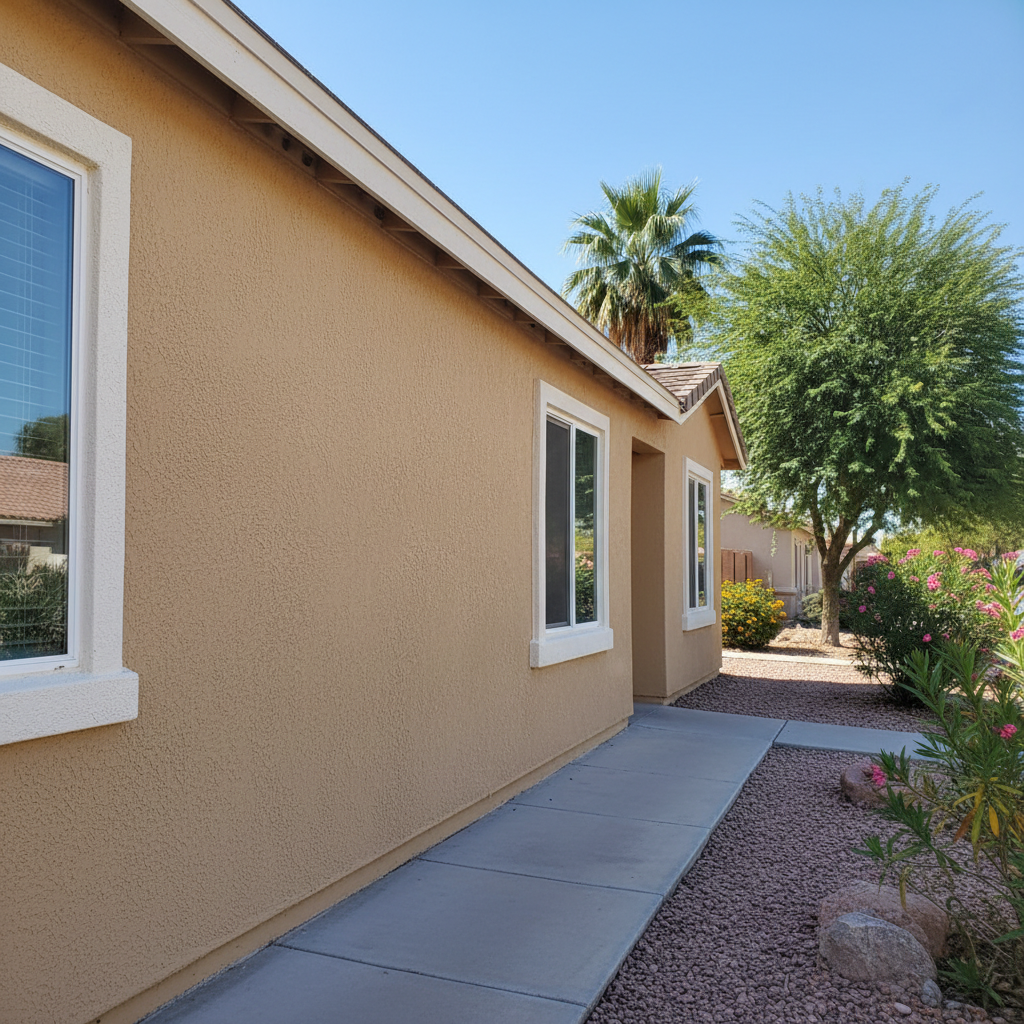
EIFS, or Exterior Insulation and Finish Systems, are a smart choice for a lot of homes here in Las Vegas. They offer great insulation, which is a big deal when it's 115 degrees out, and they look good too. But like anything else on your house, EIFS isn't a 'set it and forget it' kind of deal. You've gotta give it a little love to make sure it lasts and does its job properly.
Extending the Life of Your EIFS System
The biggest enemy of any exterior finish in our desert climate isn't just the sun, it's water. Even though we don't get a ton of rain, when we do, it can come down hard. And if water gets behind your EIFS, that's when you start having real problems. So, extending the life of your EIFS really comes down to managing water and protecting it from our intense sun.
First off, make sure your gutters are clean and working right. If water's overflowing or pooling around your foundation, it's going to find a way in. Also, keep an eye on your landscaping. You don't want plants or trees growing right up against the EIFS. They can hold moisture against the wall and even damage the surface. Trim them back, give your walls some breathing room.
Another thing I always tell folks: paint matters. When it's time to repaint, don't just grab the cheapest stuff. Invest in a good quality, breathable exterior paint. It'll protect the EIFS from UV rays, which can break down the finish over time, and it'll help shed water without trapping moisture underneath.
What Regular Maintenance Looks Like
Regular maintenance for EIFS isn't rocket science, but it does require you to be a little proactive. You should be doing a visual inspection of your home's exterior at least once a year, maybe twice if you're really on top of things. Walk around your house and look at everything.
- Clean the surface: EIFS can get dusty, especially here in the valley. A gentle wash with a garden hose and a soft brush can do wonders. Don't use a pressure washer on full blast; you can damage the finish and force water into places it shouldn't go. A mild detergent is fine for stubborn spots.
- Check the caulking and sealants: Pay close attention to where the EIFS meets other materials, like windows, doors, trim, and the foundation. These joints are usually sealed with caulk. Over time, especially with our extreme temperature swings, caulk can crack, shrink, or pull away. If you see any gaps, you need to re-caulk them. This is critical for keeping water out.
- Look for cracks or holes: Even small cracks can be entry points for water. If you see any, don't ignore them.
Warning Signs of Problems
So, you've been doing your regular checks, but what are you specifically looking for? Here are some red flags that tell you something might be wrong with your EIFS:
- Cracks: We're not talking about hairline surface cracks, which can be normal. I mean cracks that are wider than a credit card, or ones that go deep into the system. These are serious.
- Bulges or soft spots: If you push on the EIFS and it feels soft, spongy, or you see a bulge, that's a classic sign of water trapped behind the system. This is bad news, and it usually means there's rot or mold happening underneath.
- Stains or discoloration: Dark streaks, especially below windows or near the foundation, can indicate water is running down and getting absorbed. Green or black spots might be mold or mildew, which points to persistent moisture.
- Peeling or blistering paint: If the paint on your EIFS is peeling or bubbling, it's often because moisture is trying to escape from behind the system.
- Insect activity: Termites love moisture, and if water is getting behind your EIFS, it creates a perfect environment for them. If you see signs of termites near your EIFS, get it checked out immediately.
When to Call a Professional
Look, a lot of the maintenance I've talked about, you can handle yourself. Cleaning, re-caulking small areas, even patching tiny cracks – that's homeowner stuff. But there are definitely times when you need to pick up the phone and call someone like us at Las Vegas Stucco & Plastering.
If you see any of those major warning signs – big cracks, bulges, soft spots, or widespread water staining – don't try to DIY it. These issues usually mean water has gotten into the system, and you need a professional to assess the damage. We've got the tools and the experience to figure out what's going on underneath, fix the underlying problem, and repair the EIFS properly. Trying to just patch over a major issue is like putting a band-aid on a broken leg; it won't solve anything and will likely make it worse in the long run. Get a professional opinion early, and you'll save yourself a lot of headaches and money down the road.