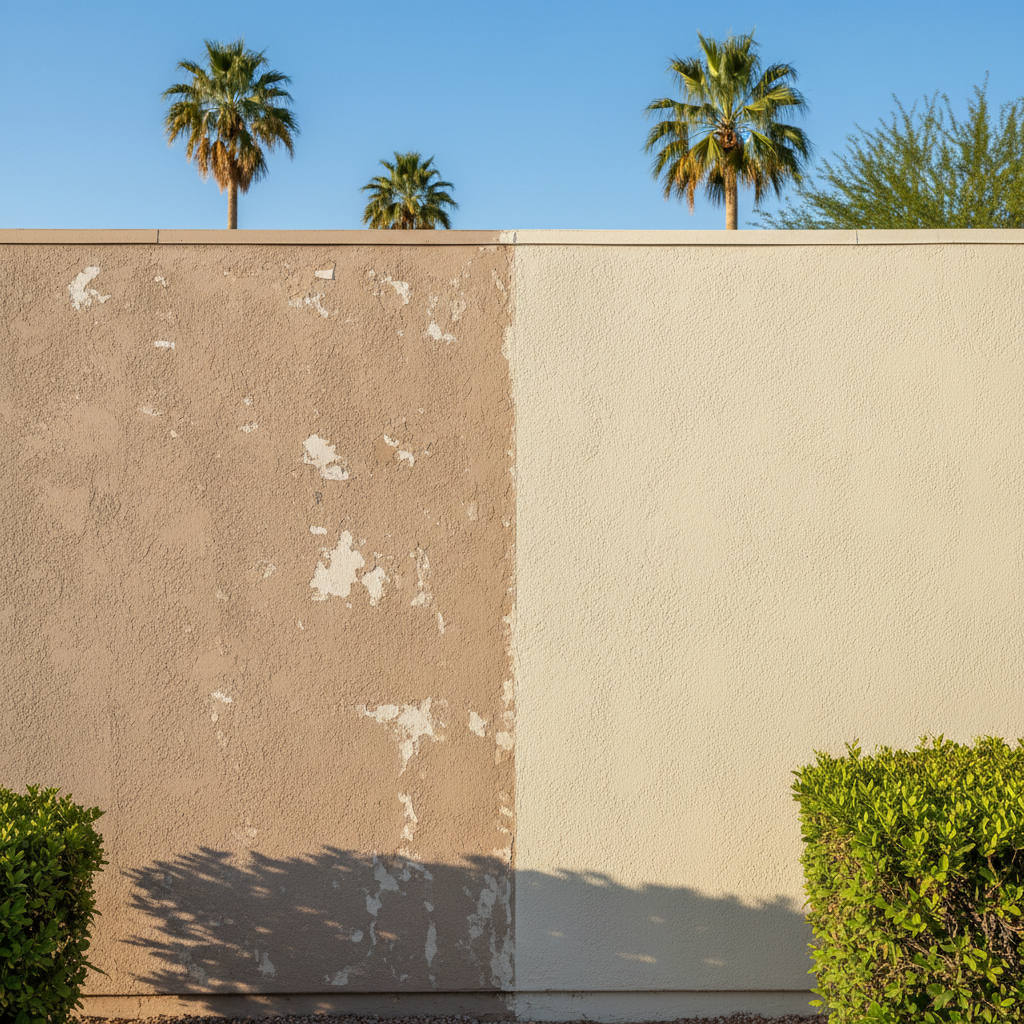
Alright, let's talk stucco. If you're a homeowner in Las Vegas looking at putting new stucco on your house, or maybe repairing what you've got, you've probably heard a couple of terms thrown around: traditional stucco and EIFS (that's Exterior Insulation and Finish System). Both are common here, but they're not the same thing. Knowing the difference can save you a lot of headaches and money down the road, especially with our desert climate.
What's Traditional Stucco All About?
When most people think of stucco, they're usually thinking of traditional three-coat stucco. This is the old-school method, and it's been around for centuries for a reason. You start with a wire lath attached to your wall, then apply a scratch coat, followed by a brown coat, and finally, the finish coat. Each layer cures, making for a really solid, hard shell.
The main ingredient in traditional stucco is cement, sand, and water, sometimes with lime. It's a heavy material, and it creates a breathable, rigid surface. You'll see this everywhere from older homes in Paradise Palms to brand new custom builds out in Summerlin. It's a proven system.
Then There's EIFS: The Modern Option
EIFS is a bit different. Think of it as a layered cake for your wall. It typically starts with an insulation board – usually expanded polystyrene (EPS) foam – that's attached to the sheathing. Over that, you get a base coat with a fiberglass mesh embedded in it for strength, and then the final finish coat. It's lighter than traditional stucco, and it's designed to be an insulating barrier.
Now, EIFS has gotten a bad rap in some places, mainly because of water intrusion issues back in the 80s and 90s when it was first really catching on. But modern EIFS systems have improved a lot, with drainage planes and better installation practices. Still, it's a more complex system, and proper installation is absolutely critical.
Cost: What's the Damage to Your Wallet?
Generally speaking, traditional stucco tends to be a bit less expensive upfront than EIFS. The materials for traditional stucco are pretty standard, and while it's labor-intensive, the process is straightforward for experienced crews. EIFS materials, especially the insulation boards and specialized finishes, can cost more. Plus, because EIFS installation is more technical and requires precise detailing for things like flashing and sealants, the labor costs can sometimes be higher too.
However, you need to look at the long game. EIFS offers superior insulation, which can mean lower energy bills in our scorching Las Vegas summers and surprisingly chilly winters. That upfront cost might pay for itself over time in energy savings.
Durability and Maintenance in the Desert
Traditional stucco is tough. It's a cement-based product, so it's impact-resistant and can really take a beating. It's also pretty low maintenance. You might need to power wash it every now and then to get rid of dust and dirt, and if you get a crack, it's usually a straightforward repair. The biggest issue we see in Vegas with traditional stucco is hairline cracking from our expansive clay soils and constant temperature swings. It's normal, and good quality stucco with proper control joints handles it well.
EIFS is also durable, but in a different way. Because of the foam insulation underneath, it's more flexible and less prone to the kind of hairline cracking you see in traditional stucco. However, because it's softer, it can be more susceptible to impact damage – a hard hit can dent or puncture the foam. Repairs can sometimes be a bit more involved to match the texture and color seamlessly, especially if the damage goes through the finish coat.
Water management is key for both, but especially for EIFS. If water gets behind traditional stucco, it usually has a way to dry out. With EIFS, if it's not installed perfectly with proper drainage, water can get trapped, leading to bigger problems down the line. That's why picking a contractor who really knows what they're doing, like us at Las Vegas Stucco & Plastering, is non-negotiable for EIFS.
Appearance: What Look Do You Want?
Both systems offer a huge range of colors and textures. You can get anything from a smooth, modern finish to a rough, Old World look with either. Traditional stucco often has a slightly more